Problems & Lessons

Problems and lessons

  • First, these are problems that I personally experienced during the construction, delivery, and use of my boat. Before purchasing it, I watched several Helmsman Trawler videos on YouTube published by the owner of Helmsman Trawlers. I watched them repeatedly before the purchase, throughout the construction process, and after delivery. It was a very exciting time. The videos explained how each boat could be easily customized for its owner. However, I found that nearly every customization request I made was met with strong resistance.
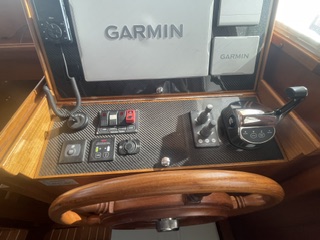
  • One example involved the thruster switches. I requested that they be moved from the left side of the helm station panel to the right side, similar to the configuration on my Beneteau Swift 30. This location would make it easier to control the thrusters while standing outside the pilothouse door and watching the position of the boat. After a great deal of arguing, Helmsman finally agreed to make the change.

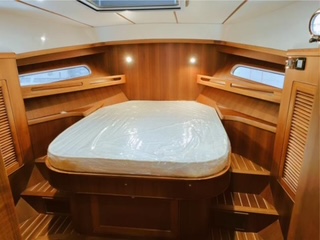
  • Another requested change was the addition of a window on each side of the forward hull to provide more natural light and a better view of the surrounding area. Again, it took a great deal of arguing to get the request approved, but Helmsman eventually agreed.
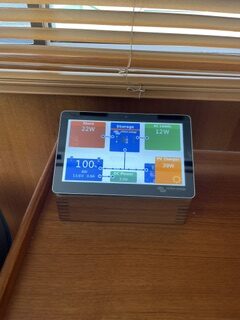
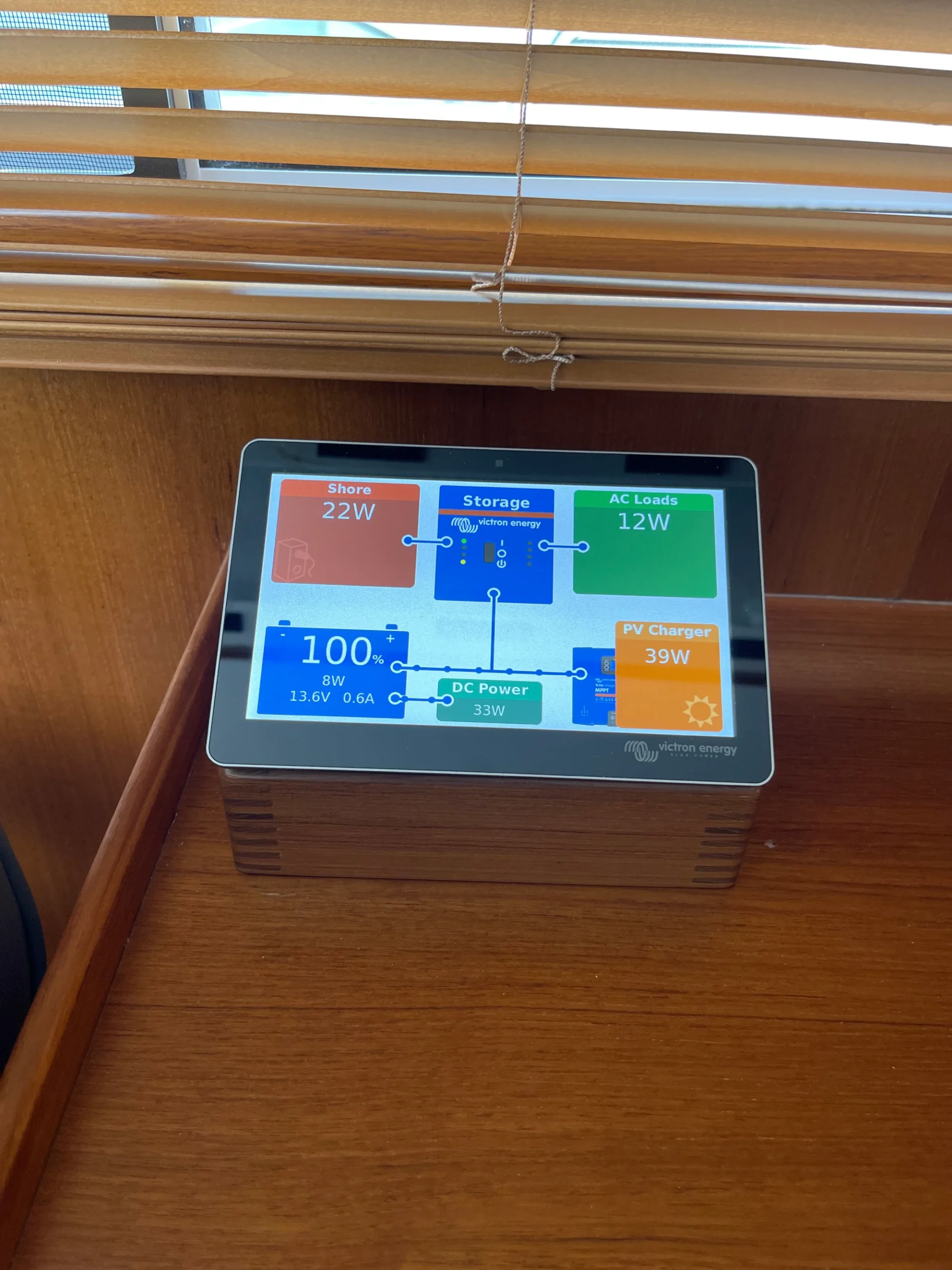
  • We also had a major, extended disagreement about placing the Cerbo GX 70 display on the shelf behind the pilot seat, where it would be fully visible. Helmsman insisted that it be mounted down low behind the smoked-glass windows in the breaker panel area. I use this display frequently to monitor the performance of my solar panels, the charge level of my house batteries, and the shore-power load. I did not want to lay on the floor every time I needed to toggle through the different screens or change settings. I lost that argument, and Helmsman shipped the display uninstalled. I later had a nice wooden mount made for it and wired it myself. The final result was perfect.

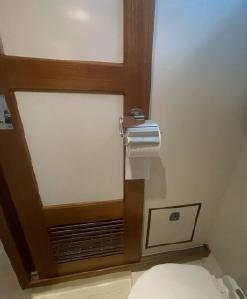
  • I also requested that the toilet paper holder in the day head be moved from its original location, which would have placed it behind the person sitting on the toilet. There was no practical way for me to twist around and reach it comfortably. Helmsman would not install it in my preferred location, so I had to mount it myself.
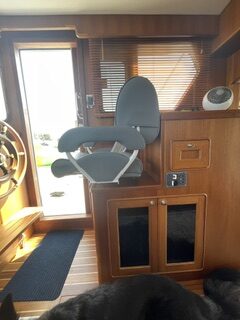
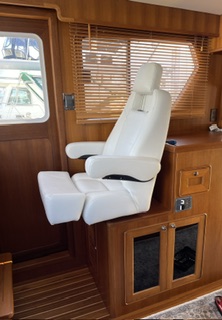
  • Upon delivery, Helmsman began the commissioning process. One of the first things they did was pull out a bag of washers to shim the front of the pilothouse helm seat. That immediately raised concerns for me. What was wrong with the seat? I found out as soon as I sat in it. Even after Helmsman added the shims, I felt as though I were sliding forward and off the seat. Their response was that I should simply stand while operating the boat from the helm.

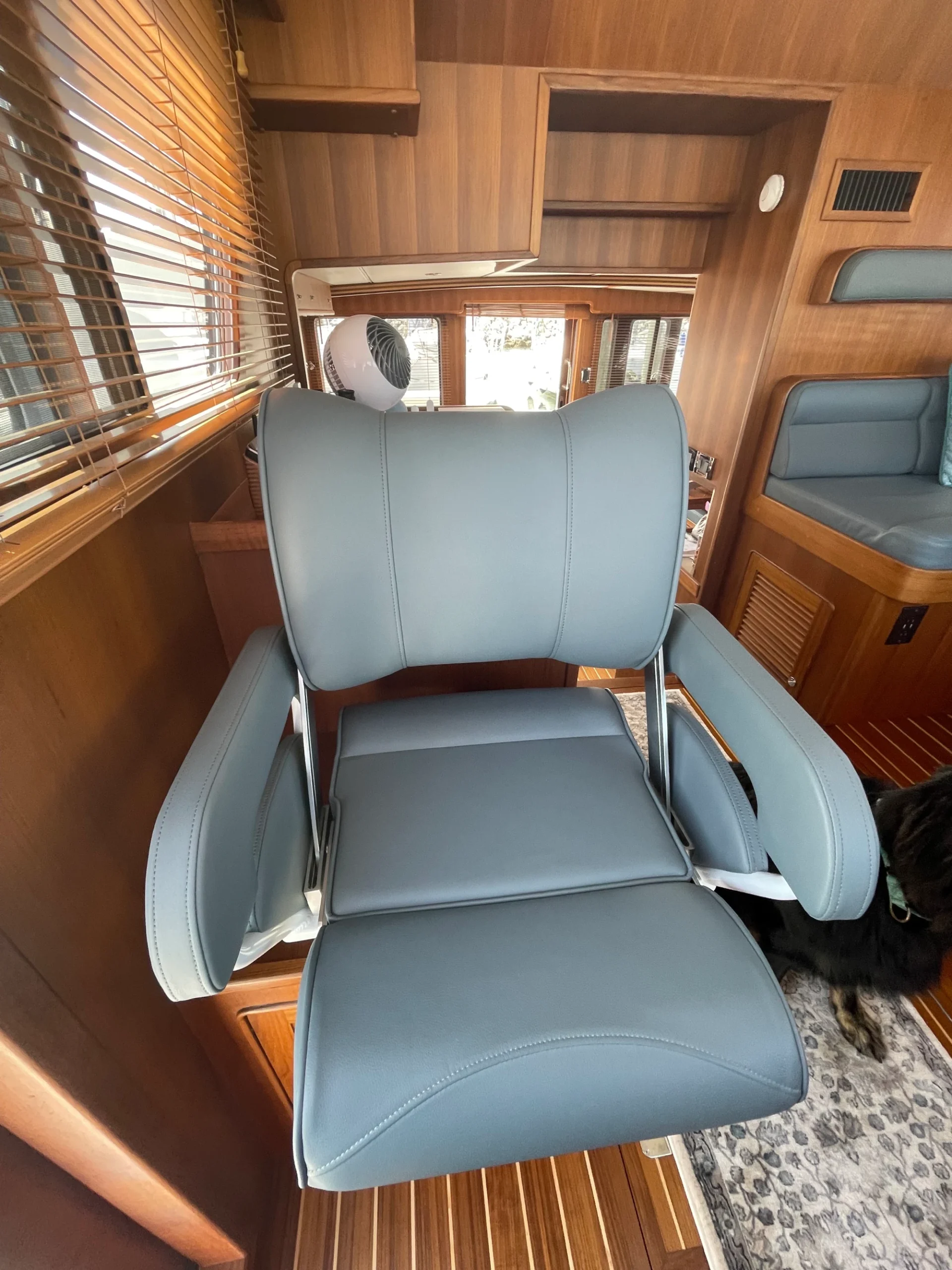
  • Helmsman told me they had been looking for a better seat but had been unable to find one, even though they had been using the same model for years. After only a few hours of searching, I found a beautiful and extremely comfortable replacement seat. It can be seen in the photos. Unfortunately, Helmsman only paid for half of my cost. 

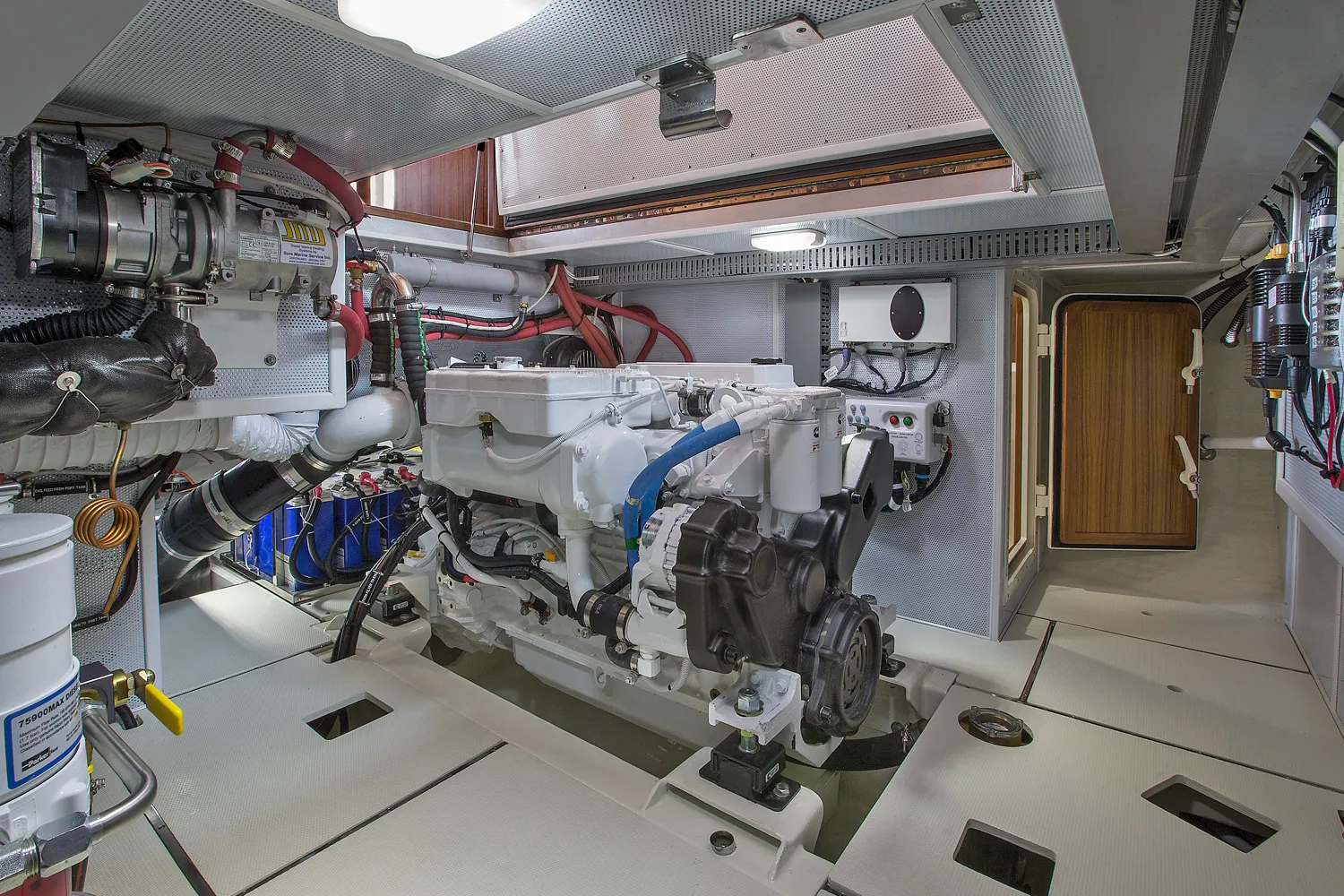
  • During the sea trial, my boat operated normally at low rpm. However, when we attempted to increase the engine speed to approximately 2,000 rpm, the engine faltered and displayed a trouble code. Cummins technicians arrived and determined that the fuel injectors were faulty and needed to be replaced. The replacement injectors were on back order and did not arrive for several weeks.
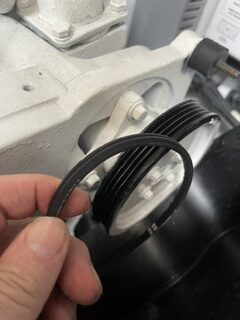
  • After taking delivery of my Helmsman trawler in Charleston, South Carolina, I began my trip home. I traveled less than five miles at low rpm before receiving an alarm indicating that the engine was overheating. I was in a dangerous area with heavy boat traffic and a lot of shoaling,  but I had no choice other than to drop anchor and wait for Sea Tow. The boat was then towed back to Charleston for repairs. The raw-water pump belt had shredded for unknown reasons. After waiting for a new belt to be installed, I left Charleston again a few days later.

  • My next destination was Myrtle Beach Yacht Club, where I planned to have the electronics and replacement fuel injectors installed. During the trip, the engine displayed several low-fuel-pressure fault codes.

  • Cummins arrived at Myrtle Beach to replace all six injectors. During reassembly, however, a Cummins technician incorrectly assembled one of the valve rockers. This caused an exhaust valve to strike the piston and bend the pushrod. Cummins replaced the damaged pushrod and assured me that no damage had been done to the valve.

  • Cummins refused to perform a leak down test on that cylinder to check compression.
  • After the electronics installation was completed, I continued my journey home to Connecticut. Unfortunately, my Cummins engine continued to experience fuel-system-related problems throughout the remainder of the trip. At times, the engine just died out, but fortunately would restart. This happened once in a narrow fairway at a marina.
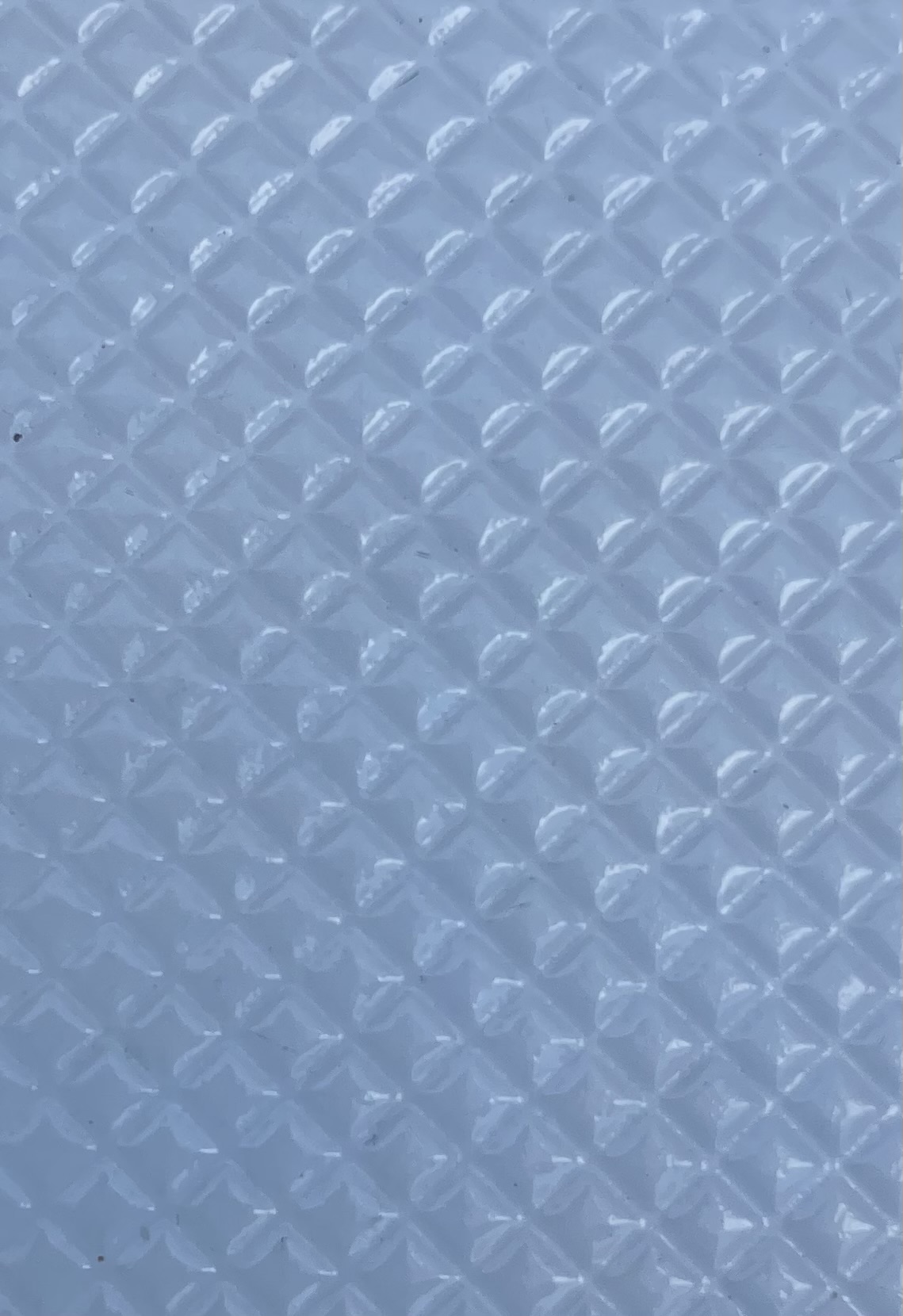
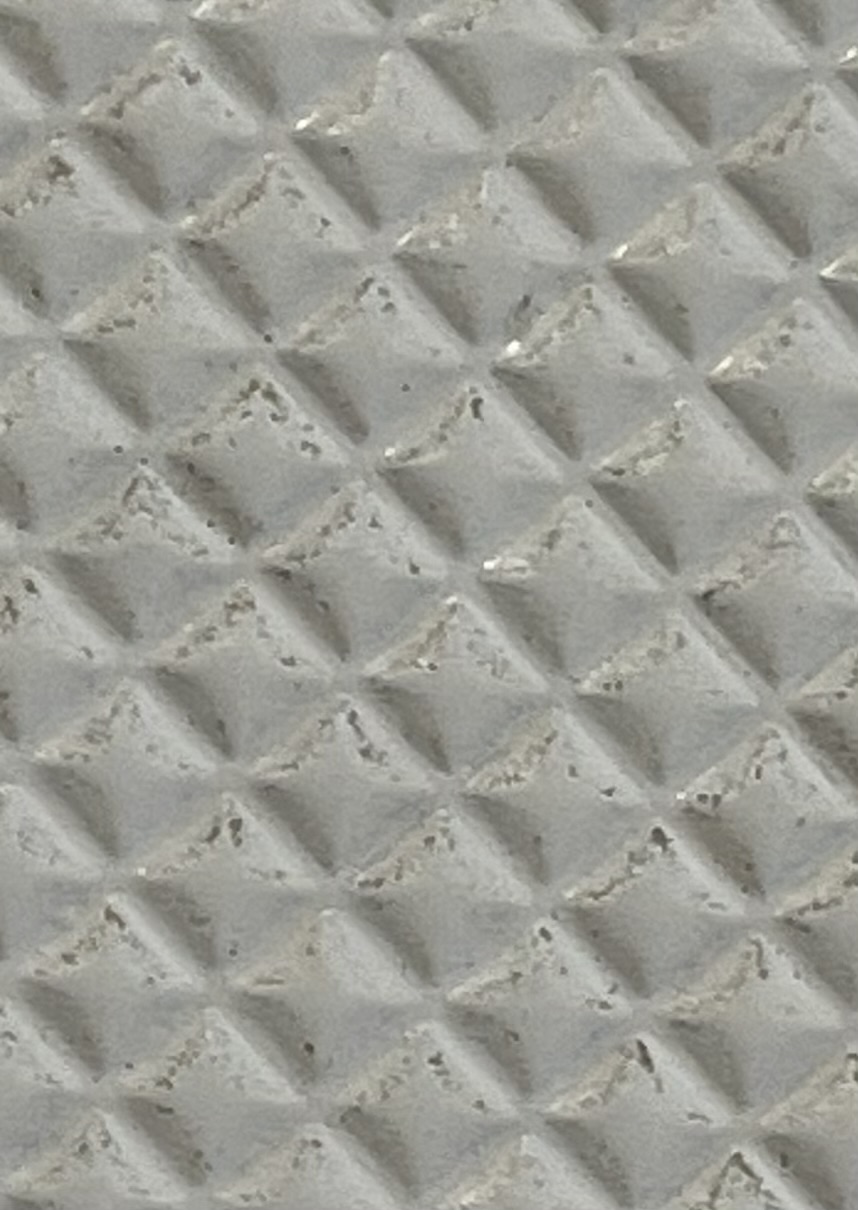
  • My non-skid gel coat was impossible to clean. I contacted Helmsman for suggestions. I tried every cleaner they recommended and others I could find, some specifically for marine non-skid surfaces and some general cleaning products. Nothing worked. I tried many different cleaning brushes, from soft to very firm. Nothing worked to remove the embedded dirt. Helmsman finally said the gel coat of the non-skid was the problem and they’ve seen it before.
    They assured me the problem was not structural and when refinished, the non-skid would be good as new.  Unfortunately, I have not received a penny for that repair of over $42,000.
  • Helmsman said, they hate it when that happens, because it’s expensive for them to fix and inconvenient for me, the owner. Their recommended boat fiberglass repair person came to my boat to check out the problem and came to the same conclusion. The gelcoat had not cured properly and the molds were not prepped properly. I called different gelcoat manufacturers and they came to the same conclusion. The only fix was to sand the non skid areas and refinish it with a special paint.
  • Interestingly, the rear swim platform was perfect. The non -skid gelcoat clean easily with a gentle stream of water. Helmsman said this is because that part is small enough to build in a controlled environment, unlike the rest of the top side fiberglass which was too large to build in a controlled environment. Gelcoat is very sensitive to mixing proportions as well as temperature. The proper formula can change daily depending on environment.
  • They also found several other defects in the non-skid surfaces that needed repair. The repair person said the mold was likely not prepared or cleaned properly and this cause the visible defects that needed repair.
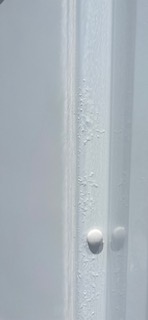
  • Several of the aluminum window frames had defects in the paint. They had a noticeable ridge as if they were repainted and the taped off area formed the ridge.
  • Several other window frames had defective paint as you could see what appeared to be the color of the primer through the paint.
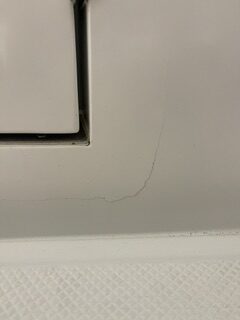
  • The rear port side door frame had cracks on both the inside and outside of the hull. In addition to this, there was a crack on the hull forward of the door. The crack was repaired, but has since returned.
  • I had all the defects examined by two other quality repair shops who came to the same conclusions about the defects. Their prices were much higher to repair than the first shop. I had the first shop do all the repairs over the winter. My non-skid now stays clean with normal washing as it should. 
  • The repair job was estimated to be a 6-week project. All three shops said the work would need to be done during the winter months as they couldn’t find an open window for an extended repair during the on season.
  • Helmsman insisted that I  wait until the following year to try some new untried process to clean the non-skid. They didn’t have any idea what it would be when I asked several times. And based on the gelcoat manufacturers engineers, there was no alternative fix.
  • I went ahead with the repairs. The boat came out beautiful, as a new boat should look. I paid over $80,000 of my money to get my boat released from the shop at the completion of the job. Helmsman has reimbursed only $14,000 so far. It appears this will be settled in court.
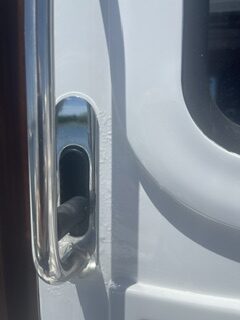
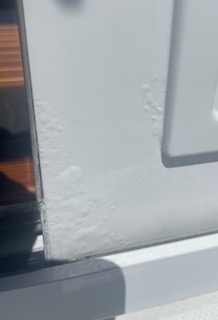
  • A few months after the Helmsman one-year warranty expired, I found the paint on the aluminum pilot house door and the aluminum track to have much bubbling under the paint. This is caused by oxidation of the aluminum that was improperly prepared by Helmsman. Aluminum painting needs to be done in a strict environmentally controlled facility. The aluminum has to be meticulously cleaned before applying the finishes. Helmsman is not standing behind these failures either, even though they admit it’s been an ongoing problem. I’ve seen this same failure on other Helmsman trawlers as well.
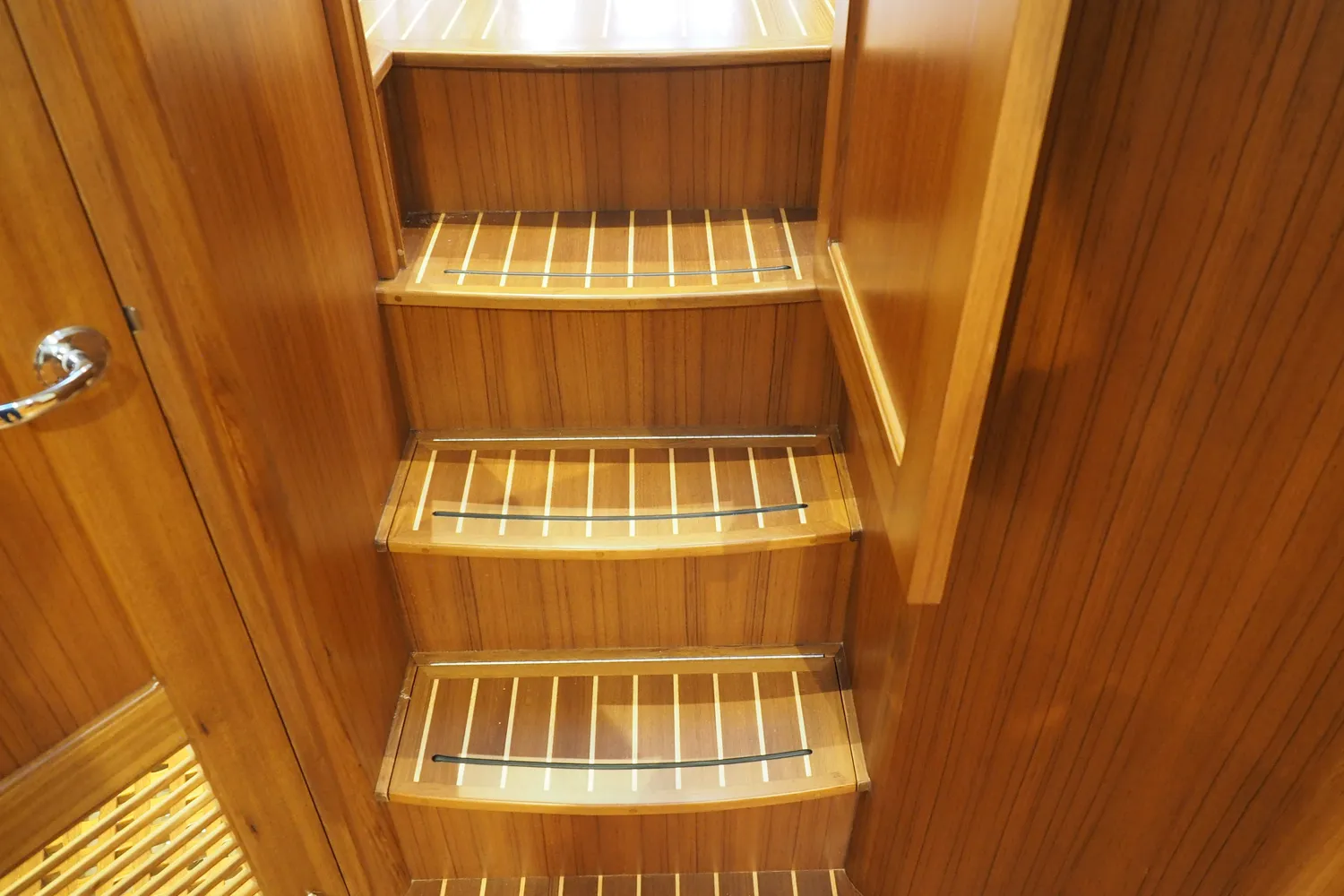
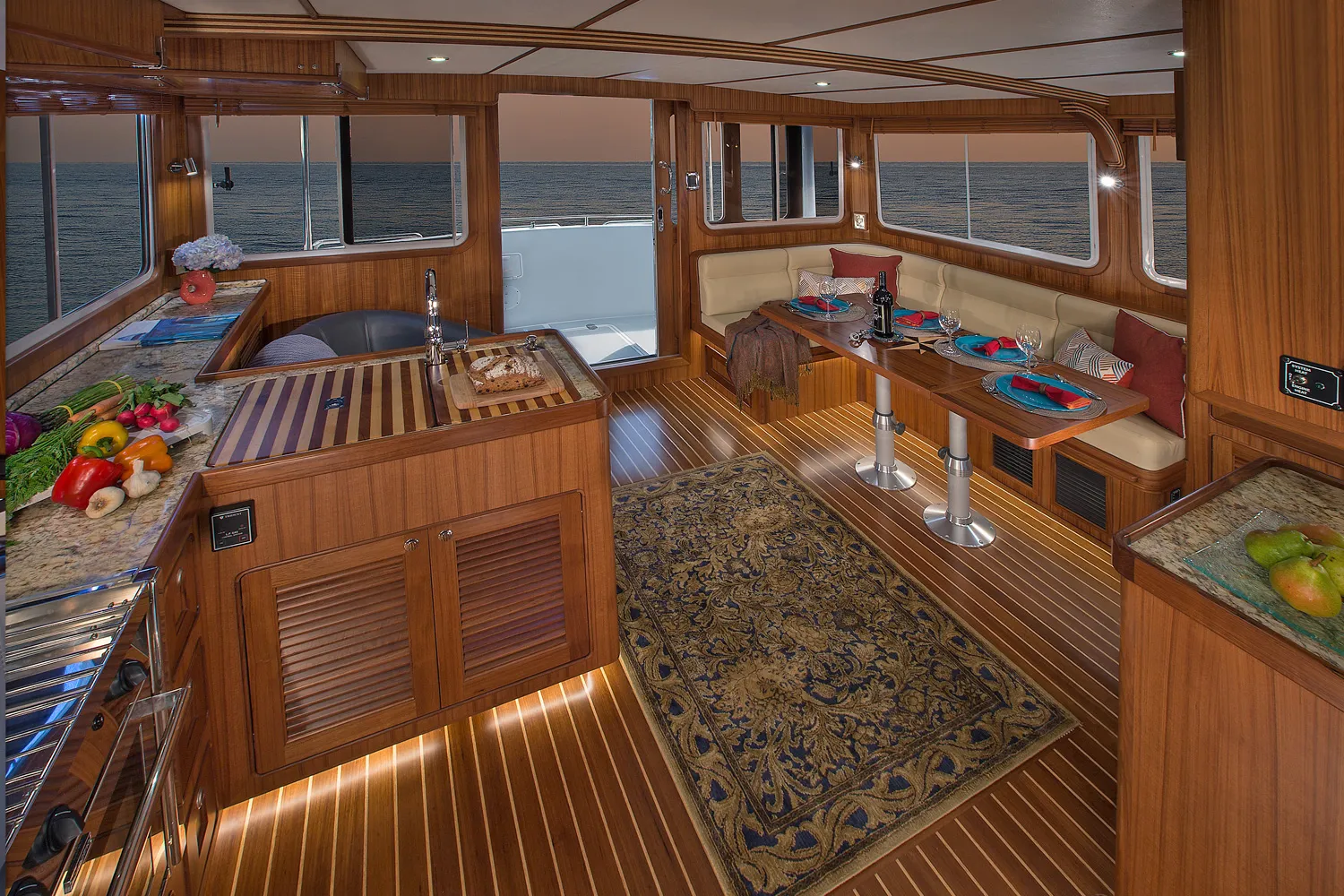
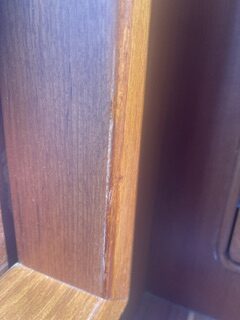
  • Allegro has a beautiful teak interior. I have found that the teak near the doors has areas where light colored streaks have appeared. It seems to be on joints where the pieces are glued together and can be exposed to the sun. Helmsman’s response was to try to clean the “gunk” off. Helmsman has not responded to further requests for help with this defect.
  • I took Allegro on a seven-month trip to Florida and the Bahamas in 2025-26. The only failures were Cummins related. The known troublesome raw water pump failed and the poorly cooled engine alternator failed. One of the Garmin Vesper radio handsets failed and some of the Garmin software needed to be reloaded.
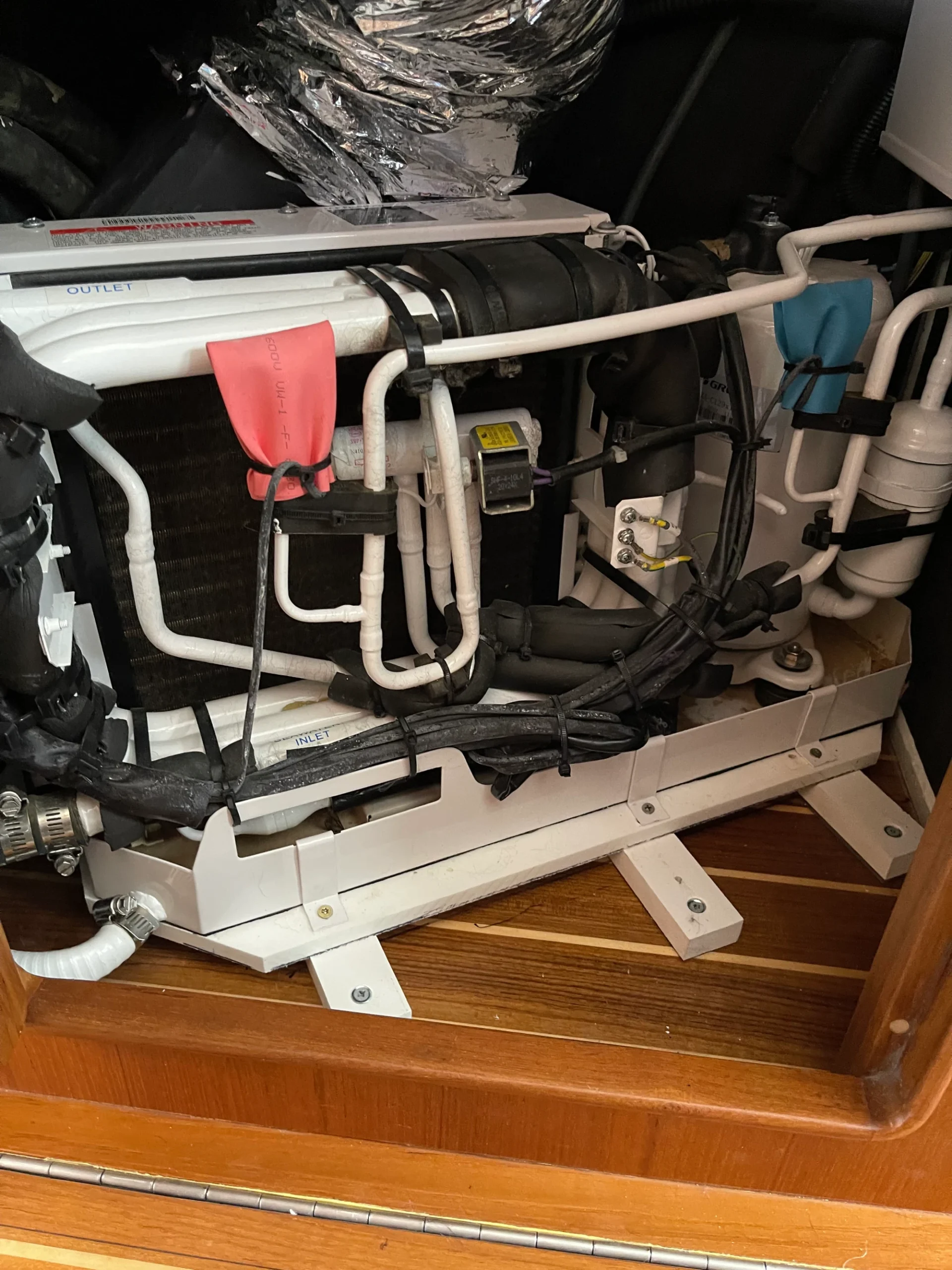
  • The Pilothouse air conditioner has been plagued with multiple problems from the start. During the build, I requested a different manufacturer than Webasto as I recognized it lacked features needed on a boat. Helmsman refused to change. Instead, they did a band aid approach to this too, adding an aftermarket soft start device. The factory mis-wired it and it did not function.Helmsman was unable to correct the problem. I had to research and correct the problem myself.
  • Upon delivery, Helmsman removed the condensation hose from the pan and drained the condensate directly into the bilge of my new boat. They eventually added a Mermaid valve to help drain the condensate.  This failed and flooded the Pilothouse floor. Ultimately, I raised the air conditioner unit up one inch and the condensate drained from the air conditioner, but the Mermaid valve failed. I ended up running a new direct drain hose from the condensate tray to a new through hull fitting that provided a continuous downward slope overboard. Problem solved. Not parts to fail. Just gravity. Helmsman has not reimbursed my expenses.
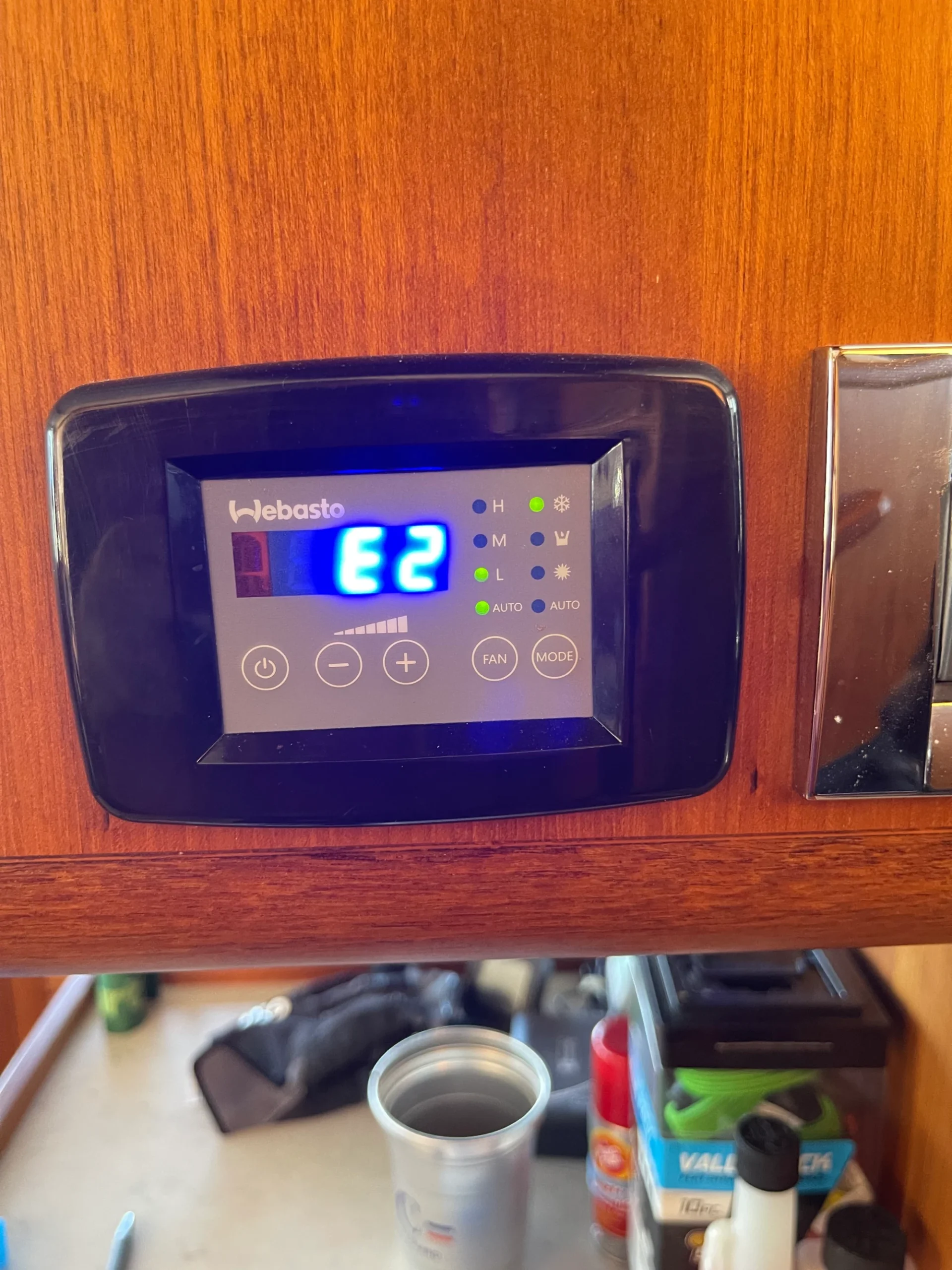
  • More on the Pilothouse air conditioner. Another know problem is E-2 error codes. The Webasto support person said this is due to inadequate air flow from the blower caused by restrictions in the distribution air ducts. This problem occurs during heat cycles too, but the E-2 code does not appear. It just shuts the compressor off. As best as I can tell, the 5 inch blower duct is marginal. Most other manufacturers of 16k btu units have 6” or 7” ducts.  To make matters worse, the built-in chase that the 5” duct connects to has a smaller cross sectional size than the 5” hose.  I’m still trying to find a work-around.
  • The fuel fill system on my boat and many other’s boat fails to fill properly. Anything greater than a slow trickle filling the tank cause fuel to burp out the fill pipe and sometimes the vent line. This apparently is caused by not having a continuous downward slope to the fuel tank. It is likely the vent line has the same problem and fills with fuel when the tank is filled all the way. The fuel should drain back to the fuel tank but apparently does not, likely due to a trap in the line.  I have not resolved this problem yet.

When replacing an electrical outlet, we discovered there were no junction boxes for any of the outlets. Junction boxes are required by ABYC standards.  I’m in the process of cutting the wall panels open in order to install the required fireproof junction boxes.

This text is a place holder